
Jaw Popping or Locking? When It May Be a TMJ Disorder
A popping jaw is often easy to ignore if it is not painful. However, if clicking occurs with stiffness, pain, or locking, it may require professional evaluation.
Not every jaw sound indicates a TMJ disorder. The key concern is whether the noise is accompanied by pain, limited movement, or changes in jaw function.
Why Does My Jaw Pop or Click?
The temporomandibular joints, or TMJs, connect the lower jaw to the skull on each side of the face. These joints work with the surrounding muscles and a small cushioning disc to help you speak, chew, and open your mouth.
Movement in the joint can cause popping or clicking. If there is no pain or difficulty moving your jaw, this is common and usually does not require treatment.
Monitor your symptoms closely if the sound becomes painful or is accompanied by stiffness, limited movement, catching, or locking.
When Is Jaw Popping a Sign of a TMJ Disorder?
Temporomandibular disorders, or TMDs, are a group of conditions affecting the jaw joints, chewing muscles, and related structures. These conditions are also commonly called TMJ disorders.
Jaw noise may be connected to a TMJ disorder when it occurs with symptoms such as:
- Pain while chewing, speaking, or opening the mouth
- Jaw stiffness or limited movement
- Pain that spreads into the face or neck
- Headaches that seem connected to jaw tension
- Painful popping, clicking, or grinding
- A jaw that catches or locks
- A change in the way the upper and lower teeth fit together
These symptoms may have various causes. An examination can help determine whether the issue involves the joint, muscles, a dental condition, or another source of facial pain.
What Does Jaw Locking Mean?
Jaw locking happens when you cannot move your jaw normally. You may be unable to open your mouth fully, or your jaw may become stuck open and difficult to close.
A brief catching sensation that resolves on its own is usually not an emergency. However, repeated, painful, or persistent locking should be evaluated, as it can interfere with eating, speaking, and normal jaw movement.
Possible jaw locking causes include:
- Displacement or abnormal movement of the disc inside the joint
- Joint inflammation or arthritis
- Tightness or spasms in the chewing muscles
- Excessive joint mobility or dislocation
- An injury to the jaw or face
These issues may require different treatments, so do not assume every locking episode is due to stress or teeth grinding.
Do not attempt to force or reposition a jaw that is stuck open or closed. Seek prompt medical or dental care if you cannot fully open or close your mouth, especially after an injury. A dislocated or fractured jaw requires immediate professional attention.
When Should You See a Specialist About TMJ Symptoms?
If you are unsure when to see a TMJ specialist, pain, limited movement, and repeated locking are stronger reasons to schedule an appointment than jaw noise alone.
Have your jaw checked if you experience:
- Jaw pain that keeps coming back
- Clicking or popping that hurts
- Trouble opening your mouth as wide as usual
- A jaw that repeatedly catches, sticks, or locks
- Headaches or facial pain that worsen when you chew or move your jaw
- Pain that makes eating or speaking uncomfortable
- A change in the way your teeth come together
- Symptoms that started after a fall, accident, or facial injury
An occasional painless click may only need monitoring. If it is accompanied by pain, stiffness, limited movement, or repeated locking, a joint evaluation is recommended.
How Are TMJ Problems Evaluated?
The first step is typically a discussion about your symptoms, when they began, and what affects them.
A First Coast Oral Surgery oral and maxillofacial surgeon may assess your jaw movement, listen and feel for joint sounds, examine your bite, and check for tenderness, tightness, or limited movement in the jaw joints and nearby muscles.
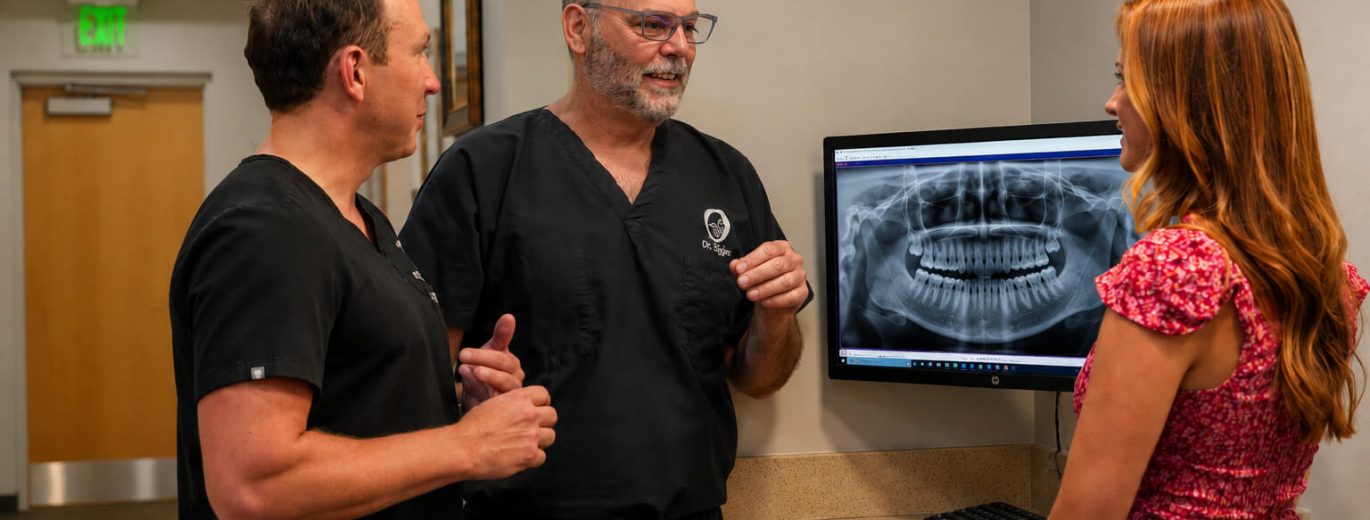
Imaging may be used to examine the joint more closely. A panoramic X-ray provides an initial view of the jaw and surrounding bones. CT or CBCT scans offer detailed images of the bony structures, while MRI scans help evaluate the disc and soft tissues. The imaging selected depends on your symptoms, examination, and suspected diagnosis.
Does a TMJ Disorder Always Require Surgery?
No. Many TMJ problems improve with conservative, non-surgical care. Treatment should be based on your specific diagnosis and typically start with the least invasive appropriate option.
Depending on your condition, treatment may include temporary diet changes, reducing habits that strain the jaw, medication, physical therapy, or other non-surgical options.
More advanced treatment may be considered if symptoms are severe, there is structural damage in the joint, or conservative care has not provided sufficient relief.
First Coast Oral Surgery’s TMJ and facial pain services include:
- Advanced diagnostic imaging
- Non-surgical management options
- Arthroscopic TMJ procedures
- Open joint surgery when necessary
- Post-surgical rehabilitation
The goal is to identify the cause of your symptoms and recommend care based on your specific condition, not just the presence of jaw noise. First Coast Oral Surgery provides both conservative and surgical TMJ care.
Schedule a TMJ Evaluation in Jacksonville
An occasional painless click may not require treatment. However, if your jaw is painful, stiff, limits movement, or repeatedly catches or locks, it is important to determine the cause.
First Coast Oral Surgery serves patients through its Jacksonville office and five locations across Northeast Florida, including Amelia Island, Lake City, Orange Park, and Palm Coast.
Schedule a consultation to discuss your symptoms, identify possible causes, and determine the best next steps.