
Corrective Jaw Surgery: What Patients Need to Know About Orthognathic Surgery
If you struggle to bite into food comfortably or your dentist says your teeth don’t come together properly, you may also have chronic jaw pain, headaches, or sleep disruptions. Does this sound familiar? Have you been told you may need jaw surgery?
If you are at that point and have more questions than answers, you’re in the right place. This guide is for patients starting to research orthognathic surgery who want a clear, honest look at what it is, who may need it, and what the process involves.
What Is Orthognathic Surgery?
Orthognathic surgery, also known as corrective jaw surgery, is a procedure that helps move the upper jaw, lower jaw, or both into a better position. It is used when the jaws do not line up properly, affecting how a person bites, speaks, breathes, or how the face is balanced.
In significant jaw misalignment cases, orthodontic treatment alone may not suffice. Braces can move the teeth, but the jaw bones may need surgical repositioning.
Corrective jaw surgery can help address issues that affect everyday life, including trouble chewing, speech difficulties, ongoing jaw pain, sleep apnea, and facial imbalance that may impact confidence. As this is a highly specialized procedure, it should be performed by an experienced oral and maxillofacial surgeon.
Who Needs Corrective Jaw Surgery?
You may be a candidate for corrective jaw surgery if you experience any of the following:
- Severe Overbite or Underbite
When the upper and lower jaws don’t meet correctly, it puts uneven stress on the teeth and makes basic functions like chewing and speaking difficult. Mild cases can often be managed with orthodontics alone, but significant skeletal discrepancies may require surgery. - Facial Asymmetry
When the jaw does not develop evenly on both sides, it can affect facial balance. Corrective jaw surgery can improve facial symmetry and support better jaw function. - Obstructive Sleep Apnea
In some patients, jaw structure can contribute to airway obstruction during sleep. When this is the case, corrective jaw surgery may help open the airway and reduce sleep apnea symptoms. - TMJ Disorders
Temporomandibular joint problems, including chronic jaw pain, clicking, locking, or limited jaw movement, may be related to jaw structure or bite alignment. When conservative treatments are not enough, surgery may be considered as part of a broader treatment plan. - Congenital Conditions
Some patients are born with jaw abnormalities that may require surgical correction once they reach adulthood and jaw growth is complete. - Trauma or Injury
Fractures, accidents, or disease affecting the jaw may require surgical reconstruction to restore both function and form.
One of the clearest signs that surgery may be needed is when both the orthodontist and oral surgeon agree that the bite or jaw relationship cannot be corrected with orthodontics alone.
What Causes Jaw Misalignment?
Jaw misalignment treatment starts with understanding the root cause.
It can be caused by:
- Genetics
If a parent or grandparent had a significant overbite, underbite, or facial asymmetry, there’s a reasonable chance that the trait was passed down. Genetics is one of the most common explanations for why the upper and lower jaws don’t develop in proportion to each other. - Uneven Growth Patterns and Childhood Habits
During growth, uneven jaw development can affect bite alignment, facial balance, and jaw function. Childhood habits like thumb-sucking, pacifier use, or mouth breathing may also contribute to bite problems. - Injury or Trauma
A jaw fracture or significant injury can affect bone healing, especially if the patient’s bones are still developing. - Cysts, Tumors, or Other Jaw Conditions
Certain cysts, tumors, or disease processes affecting the jaw bones can alter jaw structure and may require reconstructive surgery.
How the Procedure Works
Orthognathic surgery is performed in a surgical facility staffed with a specialized anesthesia team and equipped with the resources to manage complex procedures safely.
Here’s what patients can generally expect from the process:
- 1. Pre-Surgical Planning
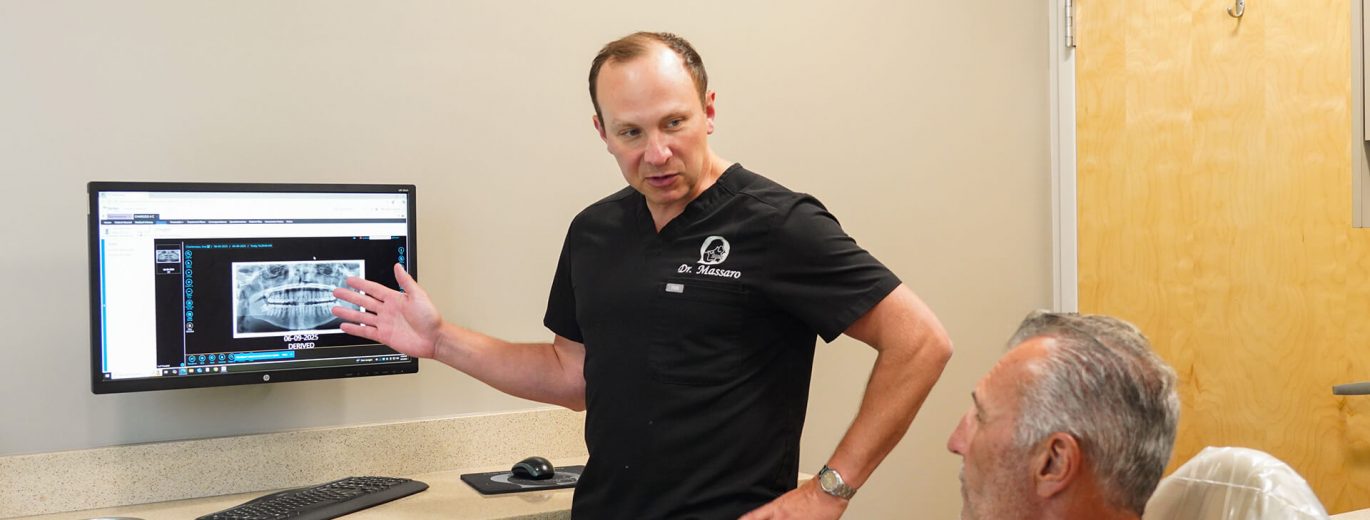
First, the surgical team must conduct a thorough evaluation. At First Coast Oral Surgery, this planning process uses custom surgical guides and detailed digital planning to map out exactly how the bones will be repositioned. - 2. Orthodontic Preparation
Most patients start with orthodontic treatment before surgery. Braces help move the teeth into the right position within each jaw, so after the jaws are repositioned, the bite can come together correctly. - 3. Surgery Day
After the patient is placed under general anesthesia, the surgeon carefully works through small incisions inside the mouth. This helps avoid visible facial scarring.
The jaw bones are then guided into their planned position and held in place with small titanium plates and screws. In some cases, only the upper or lower jaw needs to be corrected. In others, both jaws are repositioned. - 4. Recovery
After surgery, patients may spend one to two nights in the hospital before continuing their recovery at home, depending on the complexity of the procedure and their surgeon’s recommendation.Swelling and discomfort are normal during the first few weeks, and patients will need to follow a soft or liquid diet while the jaw begins to heal.
Full bone healing takes several months, and orthodontic treatment usually continues after surgery to fine-tune the bite and complete the process.
When Jaw Surgery Requires a Team
Corrective jaw surgery is usually a team effort between an oral and maxillofacial surgeon and an orthodontist. The orthodontist helps move the teeth into the right position, while the surgeon plans and performs the jaw correction.
Before surgery, both providers work from the same treatment plan so the teeth and jaws will fit together properly once the bones are repositioned. After surgery, the orthodontist fine-tunes the bite, while the surgeon monitors healing and recovery.
At First Coast Oral Surgery, our surgeons work closely with referring orthodontists throughout Northeast Florida. We use 3D surgical planning and virtual simulation to make sure the treatment goals are clear before surgery begins.
For more complex cases, we may also coordinate with other specialists, such as sleep medicine or physical therapy, depending on the patient’s needs.
Frequently Asked Questions About Corrective Jaw Surgery
Does Insurance Cover Orthognathic Surgery?
In many cases, it can. When jaw surgery is medically necessary, such as when it is needed to treat sleep apnea, significant bite dysfunction, or another documented functional problem, coverage may come through medical insurance instead of dental insurance.
At First Coast Oral Surgery, our insurance specialists can verify your benefits ahead of time and help you understand what your specific plan may cover.
- At What Age Can You Have Jaw Surgery?
Orthognathic surgery is typically performed once jaw growth is complete, usually in the late teens for most patients, though this varies. Your surgeon will assess your bone development during the evaluation. - Is There a Difference Between Jaw Surgery and Braces?
Braces move the teeth into better alignment, while orthognathic surgery corrects the position of the jaw bones. Some patients need both to achieve a properly aligned bite. - Is Jaw Surgery Performed in a Hospital?
Because orthognathic surgery involves general anesthesia and complex bone repositioning, it is typically performed in a hospital or surgical facility. First Coast Oral Surgery holds hospital privileges at Baptist Medical Center and Wolfson Children’s Hospital in Northeast Florida.
How To Start Your Evaluation in Jacksonville, FL
If you are researching jaw surgery in Jacksonville, FL, our oral and maxillofacial surgeons can evaluate your bite, jaw alignment, symptoms, and treatment options.
At First Coast Oral Surgery, our fellowship-trained surgeons have the specialized expertise, hospital privileges, and surgical technology to evaluate even the most complex orthognathic cases. We maintain hospital affiliations with Baptist Medical Center and Wolfson Children’s Hospital, and our team is qualified to provide care at every stage.
With five convenient locations serving Jacksonville, Amelia Island, Orange Park, Lake City, and Palm Coast, expert oral surgical care is available across Northeast Florida.
At First Coast Oral Surgery, we provide specialized oral and maxillofacial care for patients across Northeast Florida. Our surgeons treat a wide range of needs, from corrective jaw surgery and jaw reconstruction to dental implants and complex hospital-based procedures.